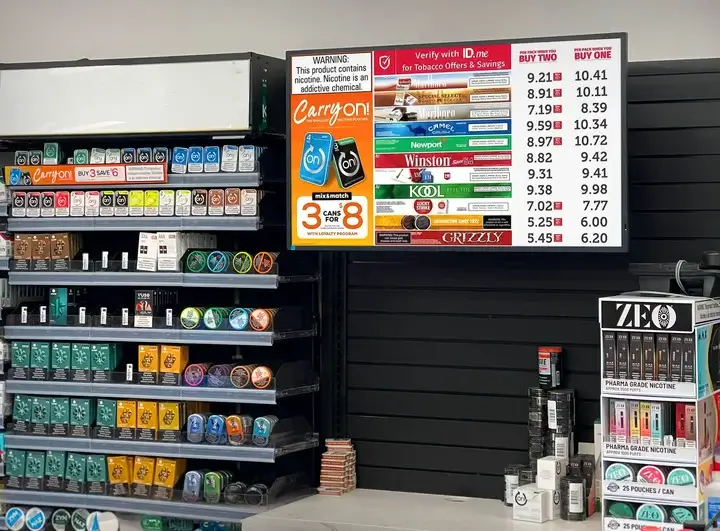
The key functionalities inherent to a digital tobacco pricing screen encompass real-time pricing capabilities, enabling the presentation of current tobacco product prices that can be promptly updated to reflect any alterations arising from promotions, taxation adjustments, or other relevant factors.

Introduction
A digital tobacco pricing screen serves as a digital display primarily utilized in retail establishments, notably within the tobacco and convenience store sectors, for the purpose of showcasing the prices of diverse tobacco products such as cigarettes and smokeless tobacco items. These screens are commonly leveraged in convenience stores, gas stations, tobacco shops, and similar retail environments where tobacco products are available.
Key Functionalities
The key functionalities inherent to a digital tobacco pricing screen encompass real-time pricing capabilities, enabling the presentation of current tobacco product prices that can be promptly updated to reflect any alterations arising from promotions, taxation adjustments, or other relevant factors. Achieving real-time pricing often necessitates the establishment of an integration between the point of sale or price book system and the digital signage content management system. Furthermore, these screens typically provide comprehensive product information, including brand names, product descriptions, and pertinent health warnings or legal details. Moreover, tobacco companies often leverage these screens to bolster their brand presence and product visibility, incorporating logos, advertisements, and other branding elements to captivate customers. Lastly, retailers commonly enjoy the flexibility of customizing the content and layout of these screens to align with their specific needs and branding preferences.
How to Select a Digital Tobacco Signage Provider
When embarking on the journey to acquire digital tobacco pricing screens for your retail establishment, it's vital to navigate through a myriad of factors to ensure that the chosen solution provider aligns with your specific needs and adheres to local tobacco merchandising regulations. These considerations should be considered when shopping for a solution provider:
Compliance with Local Regulations: One of the foremost considerations when shopping for digital tobacco pricing screens is compliance with local, state, and national regulations governing tobacco sales. These regulations encompass a wide range of requirements, including age restrictions, health warning displays, and advertising limitations. Ensuring that the selected digital pricing screen fully complies with these legal requirements is paramount to avoid potential legal complications and fines.
Real-time Pricing Updates: Real-time pricing updates are a critical functionality of digital pricing screens. Retailers need the ability to promptly adjust tobacco product prices to reflect changes due to promotions, tax modifications, or other relevant factors. To achieve this, the chosen provider should offer integration capabilities with the point of sale or price book systems, facilitating seamless updates.
Customization Options: To align with branding and promotional needs, retailers should look for digital pricing screens that offer customization options. A flexible content management system allows for the tailoring of content, layout, and design to create a cohesive brand identity and engage customers effectively.
Product Information Display: Effective communication of product information is essential. The digital screen should be able to display comprehensive product details, including brand names, product descriptions, and mandatory health warnings or legal information. This not only informs customers but also ensures compliance with health regulations.
Durability and Maintenance: The quality and durability of the digital screen are crucial factors. Retailers should opt for commercial-grade displays that can withstand the demands of a retail environment. Brightness levels should be sufficient for the store, and a reliable warranty, such as a 3-year 24x7 warranty, provides assurance against potential issues.
Technical Support and Warranty: Technical support and warranties offered by the supplier are indispensable. These provisions are essential for addressing any issues that may arise during the operation of the digital pricing screen, ensuring uninterrupted service and customer satisfaction.
Reviews and Recommendations: Customer reviews and recommendations from fellow retailers provide valuable insights into the performance and reliability of digital pricing screens. Researching these aspects can help in making an informed decision.
Scalability: Consideration of scalability is vital, especially if there are plans to expand tobacco product offerings or retail space in the future. The selected screen should be adaptable to accommodate evolving requirements.
Energy Efficiency: Energy efficiency is not to be overlooked. Assess the energy consumption of the screen, as this can have a significant impact on operational costs over time. Screens equipped with energy-saving features are environmentally friendly and cost-effective.
Vendor Reputation: Lastly, the reputation of the vendor or manufacturer should be carefully evaluated. Opt for a reputable entity known for delivering high-quality digital pricing screens and providing exceptional customer support. A vendor with a track record of reliability and customer satisfaction is a valuable partner in your retail journey.
Tobacco Merchandising Regulations
Tobacco merchandising regulations are implemented by government authorities with the overarching goals of safeguarding public health, discouraging smoking, and fostering responsible sales practices of tobacco products. The specifics of these regulations can vary significantly from one location to another, spanning countries, states or provinces, and even individual cities or municipalities. Here, we delve into common tobacco merchandising requirements that are often in effect:
Age Restriction Signs: In most areas, there is a mandate for conspicuous and well-placed signs that clearly denote the legal minimum age for purchasing tobacco products, typically set at 18 or 21 years old. These signs play a pivotal role in deterring underage customers from attempting to purchase such items.
Health Warning Labels: Packages of tobacco products typically bear graphic health warning labels that must be prominently visible to customers. Retailers are frequently obligated to ensure that these warnings remain unobstructed and uncovered.
Display Restrictions: Certain regions impose restrictions on how tobacco products can be displayed within retail establishments. For instance, products may need to be kept out of customers' easy reach or concealed from plain view.
Advertising and Promotion: Regulations often extend to governing how tobacco products can be advertised and promoted within stores. These restrictions may encompass limits on the use of branding, logos, and promotional materials.
Price Display: Requirements governing the display of tobacco product prices may be in place. In cases where digital pricing screens are utilized, strict adherence to these regulations is imperative.
Pack Size Restrictions: Some jurisdictions impose limitations on the size of tobacco product packaging, particularly for cigarettes, as a measure to curtail affordability and discourage smoking.
Minimum Pack Sizes: In certain regions, there are stipulated minimum pack size requirements for tobacco products, aiming to dissuade impulse purchases.
Tobacco Product Placement: Specific locations may enforce rules dictating where tobacco products can be situated within a store. For instance, the display of tobacco near items that might appeal to children, such as candy, could be prohibited.
Quantity Limits: Imposing limits on the quantity of tobacco products that can be sold in a single transaction is another strategy employed in some areas to discourage bulk purchases.
Compliance with these tobacco merchandising requirements is of paramount importance for retailers. Failure to adhere to these regulations can result in fines, penalties, and potential legal ramifications. Ultimately, these requirements are carefully designed to serve the dual purpose of safeguarding public health and promoting responsible practices in the sale of tobacco products. Hence, it is incumbent upon retailers to remain vigilant and informed about local and national tobacco merchandising regulations.
Conclusion
In conclusion, the acquisition of digital tobacco pricing screens is a multifaceted process that involves careful consideration of various factors. These screens are indispensable tools in modern retail, enhancing the customer experience and simplifying the management of tobacco product pricing. By prioritizing compliance with regulations, real-time pricing capabilities, customization options, and other essential features, retailers can select digital pricing screens that not only meet legal requirements but also contribute to the success of their retail establishments. Additionally, energy efficiency, durability, and vendor reputation play pivotal roles in ensuring long-term satisfaction and efficiency. In this ever-evolving retail landscape, making informed choices regarding digital pricing screens is pivotal for success.